Thinking Outside the Box for Travel Therapy Housing

Finding housing for travel therapy or travel nursing jobs can be a challenge. Some travelers get very creative when it comes to finding short term housing for travel jobs. Travel therapist couple Hailey & TR got very creative on their recent travel therapy assignment in Alaska! Learn more in this guest post about living in a truck camper!


Living the RV Life

Hey there– we are the Tie Dye Travelers, Hailey (occupational therapist) and TR (physical therapist)! We have been lucky enough to do travel therapy together since August of 2021.

This lifestyle was an easy choice for us. Get paid to go live in and explore lots of amazing places? Yes, please!

We have been living in a Fifth-Wheel RV full time since January of 2017, before we ever started travel therapy. So when we decided to do travel therapy, the logistics/housing aspect was never a question for us.

Onward, to Alaska!

As soon as we started travel therapy, we knew taking an assignment in Alaska at some point was a must for us!

It was April of 2022 when we both landed jobs at the same clinic in Wasilla, Alaska (north of Anchorage) that would begin in late May. The hard part was over, right?! Wrong.

We didn’t want to take our Fifth-Wheel because of excessive wear and tear from the long road trip, and we were unsure what the road conditions would be like at the end of our contract in November. So, we began to explore other options for housing for this assignment.

Housing Options for Alaska

Initially we assumed we would find an apartment to rent for housing during our travel therapy assignment in Alaska. First, we checked out Furnished Finder, however options were limited and pricey (up to $3,000/mo) around Wasilla, so we kept looking.

Airbnb extended stays? Same story, way too spendy.

We are very low maintenance and minimalistic, so we thought maybe a bare bones 1BR apartment to throw a mattress on the floor, but even the less desirable ones were around $1,500/month.

There were more options available in Anchorage, but making the 45 minute commute every day did not appeal to us. It didn’t help that we were arriving in the middle of May where prices were on the rise in preparation for tourist season.  

We thought, surely there were better options than throwing $10,000-15,000 out the window on rent alone by the end of the 6 month contract— not to mention having to pay for accommodations while exploring each weekend.   We always prioritize experiences gained over a dollar saved, but it was time to start thinking outside the box.

Alternative Housing Options

We considered buying a house there, to have our own little slice of heaven in Alaska and to rent out when we weren’t there. But, because we are in the field of travel therapy (viewed as “inconsistent income” with less than 2 years of history) we could not get considered by a lender. Strike two.

Back to the drawing board.

Randomly, we stumbled upon a renovated school bus for sale, and then a light bulb went off that something unconventional may be the answer!

Shortly after, we were driving along the Oregon coast and saw a truck camper for sale. Sure, we had seen many before, but never knew much about what they were actually like or capable of. That specific one wasn’t exactly what we needed, but it broadened our horizons.

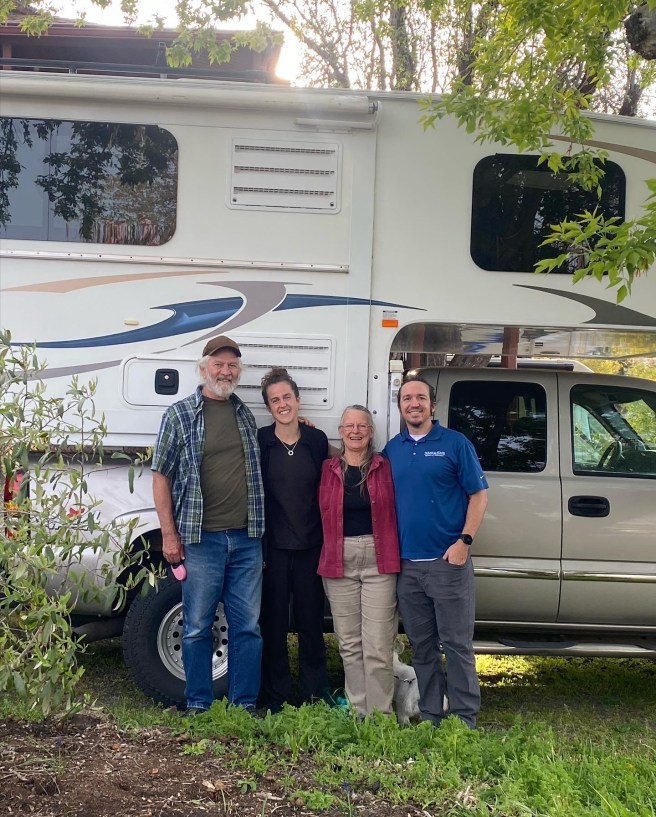
A quick search on RV trader led us to Mrs. Barbara and Bob, the sweetest couple who were selling their truck camper and truck as a combo deal. The four of us were definitely kindred spirits, and they had even bought the camper years ago for an Alaskan adventure of their own! The stars were aligning as far as we were concerned.

When we stepped inside, it was evident this would be the perfect cozy little home for our Alaskan adventure! The set-up of this specific camper (2015 Eagle Cap 850) was surprisingly spacious and livable, with a queen bed, propane stove/oven, decent sized fridge, dining table and a wet bath. Also, a fair bit of storage throughout (for all of our gear and clothes). Plus, it was already equipped with solar— we were set!
The Journey to Alaska

We picked up our new home on wheels that we named Ash (truck) and Orey (camper)- named after Ashland, Oregon where Mrs. Barbara and Bob lived- on Wednesday, April 27th. Our last day of work and departure date was the following Friday, May 6th. Things were coming down to the wire!

We thought we wanted to have our Subaru in Alaska as well so that we didn’t have to use the truck/camper as our daily driver. Our somewhat hastily devised plan was to sell the truck and camper up in Alaska at the end of our contract, and drive the Subaru back home.

Subsequently, we learned that a Subaru cannot be towed behind a vehicle with the wheels on the ground. Next mission: find a car hauler trailer. After researching different options and considering the 2,700 mile road trip we were about to embark upon, we decided to buy a new trailer, again with the intent/hope to sell it in Alaska once there.

Taking the truck, camper, and Subaru allowed us to take much more stuff with us than we would have otherwise been able to. This led to big financial savings for us by not having to pay to rent bikes, paddleboards, climbing gear, etc. for our adventures in the land of the midnight sun. The camper was fully furnished and stocked with our own things, so we didn’t have to spend money getting the essentials (pots, pans, coffee pot, etc. all the way to tables and chairs) for an unfurnished apartment. We also hung some of our own pictures and decorations to keep the cozy feel of “home,” and this made a big difference.

For our journey north to Alaska, we allowed a full ten days to soak it in. Our “mobile headquarters” allowed incredible extended stopovers and detours including Squamish, Stewart, Skagway, and Hanes. Just to cover accommodations in these places alone during our road trip would have been hundreds of dollars a night. Just as with our entire Alaskan adventure, we spent little to no money for “lodging” during our road trip, as we overnighted at beautifully scenic roadside pull-off vistas, convenient trailhead parking lots, or the occasional less scenic but appropriately priced Wal-Mart or Home Depot parking lots (free ninety free!). Having our own kitchen stocked with groceries was cost-effective as we didn’t have to stop for any snacks, meals, coffee, etc. along the trip, which can add up quick— especially when you’re at the mercy of supply and demand at the only open place within hundreds of miles in some cases in early Spring. Of course, diesel was an expense, but there was no way around that. It did help us feel secure knowing that the 50-gallon tank allowed us ample range before needing to refuel, even on the remote Cassiar Highway.

After what turned out to be an epic road trip adventure, we rolled into Wasilla. The first matter of business was to take Subie off the trailer— because we had already coordinated the sale of the car hauler for a $400 profit to a man in Anchorage for that same day! So far, this thing was working out!

We made our way down to Homer for a little adventure, where we camped on the spit and splurged $50 for a site for the first night. Turns out, that would be the only time we would pay for camping for the duration of our 6-month stay in Alaska.

During our drive up, we got connected with a friend of a friend who lived in Wasilla, who very graciously let us park in their driveway for the majority of our stay in Alaska at a substantially reduced “rental” rate. In an effort not to be too great of a burden on them, we sprinkled in a few weeknights along scenic roadside spots, our favorite lake/park where we enjoyed meal prepping outside, and an occasional night in the gym parking lot. Then each and every weekend was spent on the road to explore, camping in various free spots all around Alaska.

Perks of Living in a Truck Camper

It is safe to say that these months made up one of our favorite chapters in life so far.   A huge perk of living in the truck camper was that we never had to pack a bag! After work on a Friday, we could hop in the truck and just head anywhere – knowing we had all of our gear to be ready for whatever adventures the weekend brought our way!

The full kitchen and fully stocked fridge with us at all times was a continual cost saver. We’d wake up to a picturesque nature scene, and instead of having to drop $40 on breakfast and coffee, everything we needed was right there.

One of our favorite things was waking up every morning, opening the windows, backdoor, or sticking our heads out the skylight above our bed to admire the ever-changing beauty all around us. Check out this quick video for a glimpse at what some of our views looked like!

Countless times we would finish a big day in the mountains, and instead of going to a restaurant or brewery to replenish and recount the day, we could be home at the trailhead. We could even host a friend or two (3 at max, haha). Of course, we indulged occasionally, but by and large we had our own provisions with us and saved a ton of money this way.

Another obvious, but noteworthy, benefit was always having sleeping quarters at our disposal. For the thrifty-minded, in Alaska, this can equate to never having to pay for any campgrounds, Airbnbs, hotels or lodges. With so many fun festivals and outdoor live music events in The Last Frontier, it was amazing to be able to enjoy the festivities and have the camper nearby. This saved us from having to fight for accommodations or pay the premium tourist prices for popular events, like Mt. Marathon in Seward. Incredibly, from our parking spot that weekend, we could see the racers pass by us on the street and witness them barreling down the scree fields above the tree-line from our backdoor! Again, for free ninety free, like every other night. Also, another perk for us was sleeping at the trailhead made it easier to beat the crowds up any mountain.

Expenses

We went out on a limb and fronted the cost of purchasing a truck and truck camper combo. Clearly this was a large upfront expense, but we bet on the fact that we could recoup that expense due to the price mark-ups we had seen comparing vehicle/RV sales in Alaska with lower-48 prices.

We managed fairly low recurring expenses such as $20/wk for laundry, $10/wk for waste disposal, ~$100/wk on gas, and $140/mo for insurance for the vehicles and camper. And our monthly “rent” to park at our friends’ place was very low compared to traditional campgrounds.

However, these expenses were more than mitigated, because we ended up loving the truck camper so much as a daily driver, that we took advantage of having the Subie to earn a profit. Summer tourism in Alaska is crazy, and the cost of rental cars reflects that. We decided to put the Subie on Turo for the days we knew we wouldn’t be using it, and over the course of our stay we ended up making ~$3,000 in total by renting it out.

Selling the Truck Camper

As our contract was nearing a close, we knew time, unfortunately, was not on our side. Having a long Alaskan winter approaching is not the optimal time for folks to be in the market for a camper.

Our contract ended mid-November, so we decided that for our last month we would rent a room in a house ($800/mo) so that our camper would be cleaned out and ready to sell. It was also getting pretty chilly living in the truck camper as Alaska has a VERY short (but very beautiful) “fall,” and then it goes straight to winter without much of a warning.  

Multiple dealers told us we’d have no problem at all selling the camper in the spring for a profit, so we debated putting it in storage or leaving it with a dealer on consignment. Ultimately, we were concerned about it sitting through an Alaskan winter with no telling how much snow on the roof, so decided to remain set on selling it before our departure.  

We ended up selling the camper for a few hundred less than we paid for it (to be fair, we put our fair share of imperfections in the rig).

We decided to keep the truck for use with our fifth-wheel back home.

We also ended up selling the Subaru in Alaska for fair market price (which was more than they were going for in the lower-48), and we were able to snag a flight home for $11 with credit card perks instead of driving back in the wintery conditions. Shipping the truck back home cost ~$2,000, but it also allowed us to fill it full of most of our belongings, saving us a ton of money on having to ship these items or paying extra baggage fees through the airline.

Was it Worth It?

From a financial perspective, it certainly cost us less to purchase, drive, and live in the truck camper than it would have to rent a furnished place in Wasilla for 6 months and pay for lodging every weekend during our weekly excursions. We also came out pretty even in the end with selling the truck camper and selling the car trailer, plus selling our Subaru and deciding to keep the truck for future use.

Ultimately though, the experiences the truck camper helped enable us to have are truly priceless. Outside of work, our priorities were weekends full of exploring new places near and far, and making the very most out of our Alaskan adventure. And the truck camper definitely helped bring that vision to life!

This isn’t the perfect answer for everyone by any means, because we all have different priorities when we travel, but it most certainly worked out for us, and we wouldn’t have done it any other way!

As long as it’s the right set-up, a truck camper is surprisingly livable! We actually had a difficult time transitioning back into our fifth-wheel once we got back to the lower-48, it was so much more space than we were used to. We still miss the simplicity of the truck camper life and often discuss the option of downsizing.

Our biggest piece of advice to our fellow travelers is to not be afraid to think outside of the box— there’s no right/wrong way to enjoy this adventure we call life! 

About Hailey & TR:

We are the Tie Dye Travelers! We are adventurers and nature lovers to the core, and we love all things involving movement in the outdoors. Moving our bodies in the simplistic beauty of nature is our happy place – whether that’s trail running, paddleboarding, fast packing, rock climbing, wakeboarding, or any variety of other outdoor activities. We live in an RV and are travel therapists (Hailey- Occupational Therapist, TR- Physical Therapist) traveling to various states in this beautiful country, providing therapy to patients in a wide variety of settings, while having endless adventures all along the way. We love nature, we love each other, and we love squeezing as much adventure out of this life as possible!

Follow us on Instagram @tiedyetravelers as well as our (occasionally updated) YouTube channel to keep up with all of our adventures. One of these days we’ll be better about posting updated blogs on our website www.tiedyetravelers.com but for now we’re just enjoying the ride! Feel free to reach out to us on Instagram or by email at tyedyetravelers24@gmail.com with any questions!  

Travel Therapy Contract Cancellations

One of the biggest concerns for travel therapists is whether a travel therapy contract will get cancelled. While travel therapy contract cancellations are somewhat rare, unfortunately they do happen sometimes. When a travel therapist’s contract gets cancelled, it can leave the therapist in a bad situation. Maybe you already moved all the way across the country and have committed to a housing lease; you may have licensing expenses and other upfront costs that you will have the take a loss on; and you may or may not be able to immediately find a new travel therapy contract in that area. It can certainly be disruptive and a huge hassle when a travel therapy contract gets cancelled. But, there are strategies that travel therapists can use to try to avoid getting a contract cancelled, and further strategies to employ if a contract does ultimately end up getting cancelled.

Below, seasoned traveling physical therapist Laura Pilger shares her experiences with us about having contracts cancelled (both for herself and her husband and fellow Travel PT). She also shares advice from their experiences to help other travelers to both avoid contract cancellations when possible, and advice on how to deal with cancellations if they do happen.


Background

Hi there! My name is Laura and my husband is Justin. We are a travel physical therapist team who started as new grads and have been traveling for over six years. There are so many amazing reasons to be a travel therapist, however short term contracts do come with risk. Even when we sign our contracts, typically anticipated for 13 weeks, that is not a guarantee. Enter the dreaded cancellation clause. Typically the cancellation clause will be 30 days or two weeks, and it’s included in a travel contract to allow either the facility or the therapist to back out of the contract after giving the specified time notice. Most travelers would agree that one of the biggest concerns is having the facility cancel the contract and being out of a job. We spend so much time and energy searching for that next great contract, finding housing, traveling across the country, starting from scratch at a new facility, setting down some roots and making some friends, and then…

That phone call from your recruiter: “Your facility gave their notice today.”

Uh, what?

While contract cancellations are not common, I just so happen to be one of the ‘lucky’ few who have heard that dreaded phrase FIVE times throughout my traveling career. Each time provided a new learning experience and required different types of problem solving. I hope sharing my experiences can benefit you by providing strategies to try to avoid a cancellation, tips on how to handle it, and provide hope that what seems like the worst of situations can turn out to be one of the best things that could have happened to you.

My Experiences

First Cancellation

My first experience with a contract cancellation occurred just two weeks into my very first travel contract. I was working in a skilled nursing facility (SNF) who contracted out rehabilitation services to a company I will call “Company A.” Sometime between Company A hiring me as a contractor and my start date, the SNF changed rehab providers from Company A to a new company, “Company B.”  Company A waited until two weeks before their contract expired to give me my notice (this contract had a two week cancellation notice). There was an option for me to potentially stay and sign a new contract with Company B, however that would require completing another interview with the new company and was dependent on whether they would agree to hire a traveler. That would require a “wait and see” approach, which I was not comfortable with. As a new grad traveler who had no experience with how to handle this situation, I panicked.

This is where having a good recruiter is key. My recruiter understood that having moved to the area two weeks ago with my husband working at a separate facility, I was not in a position to look for other contracts far away. Fortunately, we were renting a house from a family member and had a lenient housing cancellation policy, so housing was not an issue. Fortunately, within a day, my recruiter was able to find three new contract options all within an hour of where we were living. While the commutes were long, at least I had options – plural! I interviewed with my two top choices and ended up working at another SNF located 30 minutes away. This job was actually drastically better and more enjoyable than the first job. At the time, it was an extremely stressful and uncertain situation; however, in hindsight I am very thankful that everything worked out the way it did.

Second Cancellation

My next experience with a contract cancellation occurred during my third contract. I was working in a small outpatient office, which was actually operated by the same “Company A” that I started working for during my first contract. While Company A is typically known for services it provides in SNFs, it also happened to operate an outpatient clinic in California. The job was fantastic: one on one patient treatments with an hour per patient. I had a much better experience with Company A this time around — until I got that dreaded phone call from my recruiter one day while biking to work. The company was able to hire a permanent employee to fill my position. Once again, I only had a two week cancellation notice. Fortunately, at the time of my notice, I only had four weeks left in my contract, so I was going to end just two weeks short. We had a month to month lease, so housing was not an issue. My husband was also working a separate contract that also ended in four weeks, so it was not logistically an option for me to start looking for another contract without him. It seemed like my only option was to spend two weeks not working while my husband finished his contract. Fortunately, we were living in the Bay Area of California, where there are physical therapy needs everywhere. I was able to find a PRN position at a nearby SNF for full time hours to make up for my lack of work for the last two weeks.

Third Cancellation

My next experience with a cancellation occurred while searching for our fifth contract. This time around, it also included my husband Justin. We had both signed on to work at the same SNF in northern California starting early in January. Life threw us a major curve ball when we got a phone call from our recruiter on Christmas Eve that the facility canceled both of us, prior to our start date, due to hiring a permanent employee. So this put us back to square one on our job search. Fortunately, we had not found housing yet, so that was not an issue. Needless to say, we definitely had an interesting Christmas scrambling to find a new contract.

Fourth Cancellation

Following the “Christmas cancellation,” we were feeling pretty stressed and desperate to start work immediately to help pay off our student loans. This made us rush into accepting the first jobs we could find: a pair of jobs at another SNF in California. The pay was good, the start date was perfect, and there was even a completion bonus — so we accepted the contracts. In hindsight, however, this was a mistake. As I mentioned before, we were feeling stressed and desperate following our last cancellation, so we knowingly overlooked some potential red flags. We figured it would most likely be okay, and especially since everything else about the jobs met our criteria, we felt we could make it work for 13 weeks. Turns out we were wrong.

The facility was not an ideal work environment. We were now well into our fifth contracts, having worked almost two years as travelers, and this is the first time we were strongly considering giving our notice. Around this time, our caseloads were getting very low so we were also not meeting our guaranteed hours. It was the morning of Valentine’s Day when we decided we were going to give our notice to our recruiter by the end of the week. Moments later, our recruiter called notifying us that the facility was cancelling both of our contracts due to low caseload. Needless to say, we have never been more thrilled for our contracts to be canceled, especially because that meant we would get to keep our completion bonus since we didn’t put in the notice ourselves.

Our contract once again had a two week cancellation clause, and we were renting a house through AirBnB. Long term AirBnB rentals have a cancellation policy of 30 days, so we immediately modified our rental dates. Our recruiter began searching for new contracts for us. Because we were working in the Bay Area of California where there are numerous job opportunities, he was able to secure us two new positions right on the coast. We were both able to gain experience in new settings with higher paying jobs, in addition to finding new housing right on the ocean. We ended up paying for two extra weeks of housing than we needed. However, the fact that we were able to keep our completion bonus from the previous contract and ended up with two higher paying jobs, we count the “Valentines cancellation” as a win.

Fifth Cancellation

The year of 2020 brought a wave of uncertainty to the travel therapy market caused by the COVID-19 pandemic. Justin and I were roughly one month into our contracts working in an inpatient rehab unit in a hospital in Southern California. As hospitals and clinics were canceling elective surgeries and people were avoiding going to emergency rooms and hospitals, our caseloads were drastically diminishing. Furthermore, because hospitals were looking to save costs anywhere they could, contract workers were one of the first to go. It was not long after the pandemic started that our supervisor apologetically informed us they were going to have to cut our contracts.

This was an unprecedented situation for us. We knew that losing these contracts would be more disastrous than previous contracts, primarily because of how poor the job market was looking due to the pandemic. We knew it would not be easy for us to find two new contracts to replace these. Furthermore, it was not certain how infectious or deadly the virus was yet. We were expecting that we would likely go months before finding something new. So this was our time to get creative.

We decided to take our chances with an unusual counter offer. We figured we would likely be without work for potentially a few months, so we decided to lay low in Southern California at our AirBnB which was on a horse ranch. We thought, if we could at least just make enough money to cover the cost of our living expenses, we would not have to touch our savings. The next day, we negotiated to work Saturday every week for the remainder of our 13 week contract. Under normal circumstances, this may not be the best solution for a contract cancellation. However, during those first few months of a developing world pandemic where toilet paper was flying off the shelves, we were able to negotiate with our company for a win-win scenario.

Understanding Contract Cancellations

Why Contracts Get Cancelled

As you may have noticed from my experiences, contracts can get cancelled for various reasons. While it is not that common, it can happen. Possible reasons for a facility cancelling contracts include:

  • The facility hired a permanent employee
  • Patient caseload is consistently too low
  • Change in management/hiring company is no longer providing services at the facility
  • World pandemic
  • Issues with traveler performance at work (I have not experienced this one!)

How to Protect Yourself

While there is never a 100% guarantee your contract will not get cancelled, there are certain things you can consider about a potential contract that may help you determine the relative risk of it happening to you. 

Consider what company you are working for

Most of my cancellations were by larger therapy companies contracted into facilities, specifically SNFs. Hospital based positions or facilities that provide their own therapy in-house seem to have lower risk of cancellations. It is important to note that just because you are working in a SNF does not automatically mean your risk of cancellation is higher. Likewise, working a hospital based contract does not guarantee immunity from cancellation either.

Ask key questions during the interview

Helpful questions could include:

  • Why is the facility hiring a traveler?  If the facility is hiring to cover for family medical leave or maternity leave for an employee for a specified amount of time, the likelihood of your contract getting cancelled is low. If the company is hiring a traveler to fill a need for a permanent employee vacancy, there is more opportunity for a contract cancellation if they find a permanent employee. But even if a permanent employee is hired while you are on contract, a company may not opt to cancel right away. They may keep you on for a more seamless onboarding process and to provide overlap with the new employee.
  • Has the facility hired travelers before? If so, for what reasons? Have they ever had to cancel a contract?  Specific yes or no answers to any of these questions is not cause for concern. However, the answers to these questions may help give you a level of confidence or trust, in addition to insight into how they value you as a traveler.
Check your contract

Any well built contract includes a cancellation clause, which is typically either two weeks or 30 days in length. A 30 day cancellation notice offers more protection because short term rentals are typically month to month or include a 30 day notice option. Whether a contract includes a two week or 30 day cancellation clause is typically up to company policy, and from my experience is something that may be negotiable but not always. It’s always worth asking though if it’s possible to get the 30 day cancellation clause. But, sometimes great contracts come with only a two week cancellation notice. This is something you need to determine whether you feel comfortable with. Understand if your contract does get canceled, you will have that much less time to problem solve with only a two week notice. That being said, all of my cancellations have occurred with a two week cancellation notice, and I was able to recover with minimal loss of expenses.

Consider housing implications

We have one cardinal rule when finding housing in the travel market: always sign a lease with the expectation that you might have to move out early. You can save yourself from losing money by trying to stick to this rule. Justin and I have used three different strategies for negotiating a lease:

  • Sign a month to month lease. This is a best case scenario because it offers the most flexibility for ending a lease term. 
  • Sign a short term lease with a 30 day cancellation notice. In this case, you would actually be committing to paying rent for a specified number of months. Justin and I have found that some landlords strongly prefer this type of lease because it gives them more assurance that their unit will be rented for a certain time frame. We have had success asking landlords to add a clause where we would be allowed to break our lease without penalty with a 30 day notice under the circumstance that we were to lose our jobs. Booking through AirBnB could be included in this method because all long term rentals on that platform include a 30 day cancellation policy.
  • Sign a long term lease that has a low lease termination fee. Sometimes there are not a lot of housing options, especially if you travel with a pet. Some apartments and landlords will only consider lease terms for 6 months or 1 year. Some of these leases might include an option for early termination for a fee equal to one month’s rent. Depending on the cost of rent, this may be a feasible option. While this is our last resort, Justin and I have opted for this with an apartment that cost $475 per month. Considering our other short term options in the area were significantly more expensive, this option actually cost us a lot less even with the early termination fee. 

Under no circumstances do we sign a long term lease where we would be committed to payments for the entire lease terms, or where we are dependent on the landlord finding another tenant for the remainder of our term. That is too risky with the potential to lose out on a lot of money.

Consider your location

You can do some research or talk to your recruiter about where they are seeing the highest concentration of travel contracts for your discipline. Usually more populated areas and bigger cities tend to have a greater number of contracts available compared to rural areas. If you are working in a populated area like San Francisco and your contract gets canceled, the likelihood that you will be able to find another contract in the same area is pretty high. This means you will have less time off between jobs and may even get away with keeping your same housing. However, if you are working in a remote town, a contract cancellation will likely result in moving and taking more time off between your next contract. Of course, there are definitely many reasons to opt for a rural versus urban contract. But it is important to understand how the location of your contract will affect your planning and decision making in the event of a contract cancellation. If you choose a contract in a more rural area, try to be extra vigilant on the other factors listed here that can affect you in case of a cancellation.

Work with a trustworthy recruiter

The last thing you want to feel when your contract gets canceled is alone. Working with a reputable, experienced, and trustworthy recruiter is an essential factor to a successful and stress free travel career. First, a good and experienced recruiter is more likely to offer you opportunities with reputable companies/facilities that they have a good history with. This can improve your confidence that you are signing a solid contract. Second, you want a recruiter that will be there for you if disaster strikes. You should have confidence that he or she will be available and provide timely communication to both you and the facility. Furthermore, he or she will understand that you should now be his/her highest priority client for finding a new contract. Not all recruiters are created equal, and that is a lesson every traveler learns through experience; however, networking with other travelers is a great way to gain connections with top recruiters.

Manage your savings

Considering you are reading this as a guest post on Travel Therapy Mentor’s webpage, the concept of saving and investing is likely not new to you. So I won’t go too in depth here since they have a lot of content on finances already.

As a traveler, it is essential to maintain a solid savings account (emergency fund) that can cover you in the event of emergencies or if your contract gets canceled and you lose your job. Setting aside enough money that you could pay all of your living expenses for at least three months is a good starting point.

What To Do When Your Contract Gets Cancelled

The most important lesson I have learned from contract cancellations is this: do not make quick decisions based on emotions or desperation. It can feel scary and lonely to suddenly be back at square one, searching for a new job while in a new place, especially if you are a new traveler. Rest assured: everything will be okay. Here is a quick checklist for how to turn some bad news into an opportunity for a new adventure:

  • Determine your priorities. Do you want to stay in your current location or are you open to moving? If you want to stay, are you open to potentially finding PRN work to bridge the gap until your next contract or until the end of your housing lease? Do you have enough in your savings to take an impromptu staycation? Depending on your situation, you may be able to renegotiate hours just to make enough to cover living expenses until you can figure out your next contract. Be creative and do not be afraid to ask– you never know what a company will say yes to. 
  • Talk to your recruiter and develop a plan. Let your recruiter know what your priorities are for your next contract. He or she should start working on this immediately. It’s also a great idea to have a relationship with a few different recruiters so that if you are scrambling to find a new contract, you can ask all of them in order to open up more options.
  • Contact your landlord. Let your landlord know what has happened and your expected move out date. There are a lot of kind people in this world, and sometimes if someone hears that you have lost your job, they may be open to modifying your move out date or potential associated fees. 

Final Notes

How to set yourself up for success:

  • Have enough money in your savings that you could live within your means for up to three months without work if needed.
  • Find month to month housing, or housing with a 30 day cancellation notice, so you are not trapped in a lease without a job.
  • Make sure your contract has a cancellation clause to give you time to game plan if needed, preferably 30 days but at least two weeks.
  • Work with a recruiter whom you trust and is readily available, and have a relationship with a few backup recruiters as well.

Travel therapy contract cancellations are not common. If you are starting out, do not expect your experience to be like mine. There are many travelers out there who have never had a contract cancelled. However, be aware that there is always a risk when working in the travel healthcare industry. These experiences have taught me that flexibility is key. And even more importantly, I have found that opportunities just as good (or even better) are always just around the corner. Cancellations are just life’s way of saying: “There is something better for you out there.” Remember, life is a journey! Enjoy the ride!


Guest Post Written by Laura Pilger, PT, DPT.

Laura and her husband Justin are a travel physical therapist couple from Wisconsin. They met in cadaver lab as first year physical therapy students at Concordia University Wisconsin. They earned their Doctor of Physical Therapy degrees in 2017 and started traveling right away as new grad physical therapists. They began traveling thinking they would try it out for a year or two, but have now been traveling for six years with no plans to stop. Laura and Justin love the outdoors, hiking, camping, and international travel. You can connect with them on Facebook or Instagram at @exlore_laur_dpt and @justinpilger, or follow along on their adventures and check out their self proclaimed ‘poorly updated’ blog here.